Bobby Fischer Gallery
The photographs of Bobby Fischer form one of sport's most compelling visual narratives. From his earliest appearances as a gangly teenager hunched over a chessboard in Brooklyn to the grainy footage of his final years in Reykjavík, the images trace the arc of an extraordinary life — genius, triumph, isolation, and exile.
Fischer was one of the most photographed chess players in history, yet he was also one of the most reluctant subjects. His battles with photographers and camera crews — from his demands to remove cameras at the 1972 World Championship to his later insistence on avoiding the press entirely — add a layer of tension to every image that exists. Each photograph is, in some sense, a small victory over Fischer's desire for privacy.
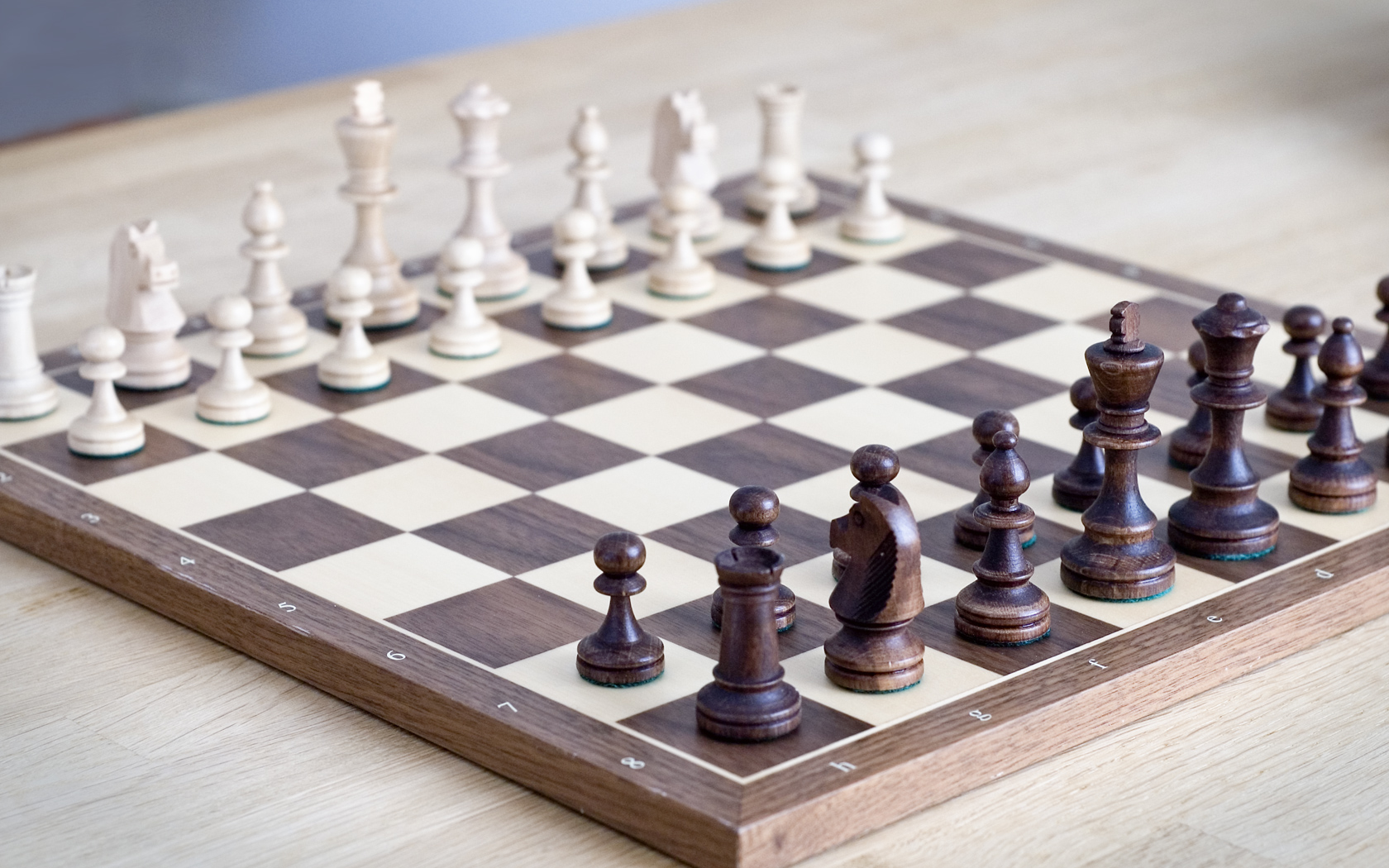 The Staunton chess set — the standard tournament design used throughout Fischer's career and still the required set for official FIDE competition today.
The Brooklyn Prodigy (1956–1960)
The earliest photographs of Fischer at the chessboard show a thin, intense boy with an oversized focus. In these images — taken at the Manhattan Chess Club, the Marshall Chess Club, and various tournament halls around New York — Fischer is almost always hunched forward, his eyes locked on the board, his body language radiating concentration.
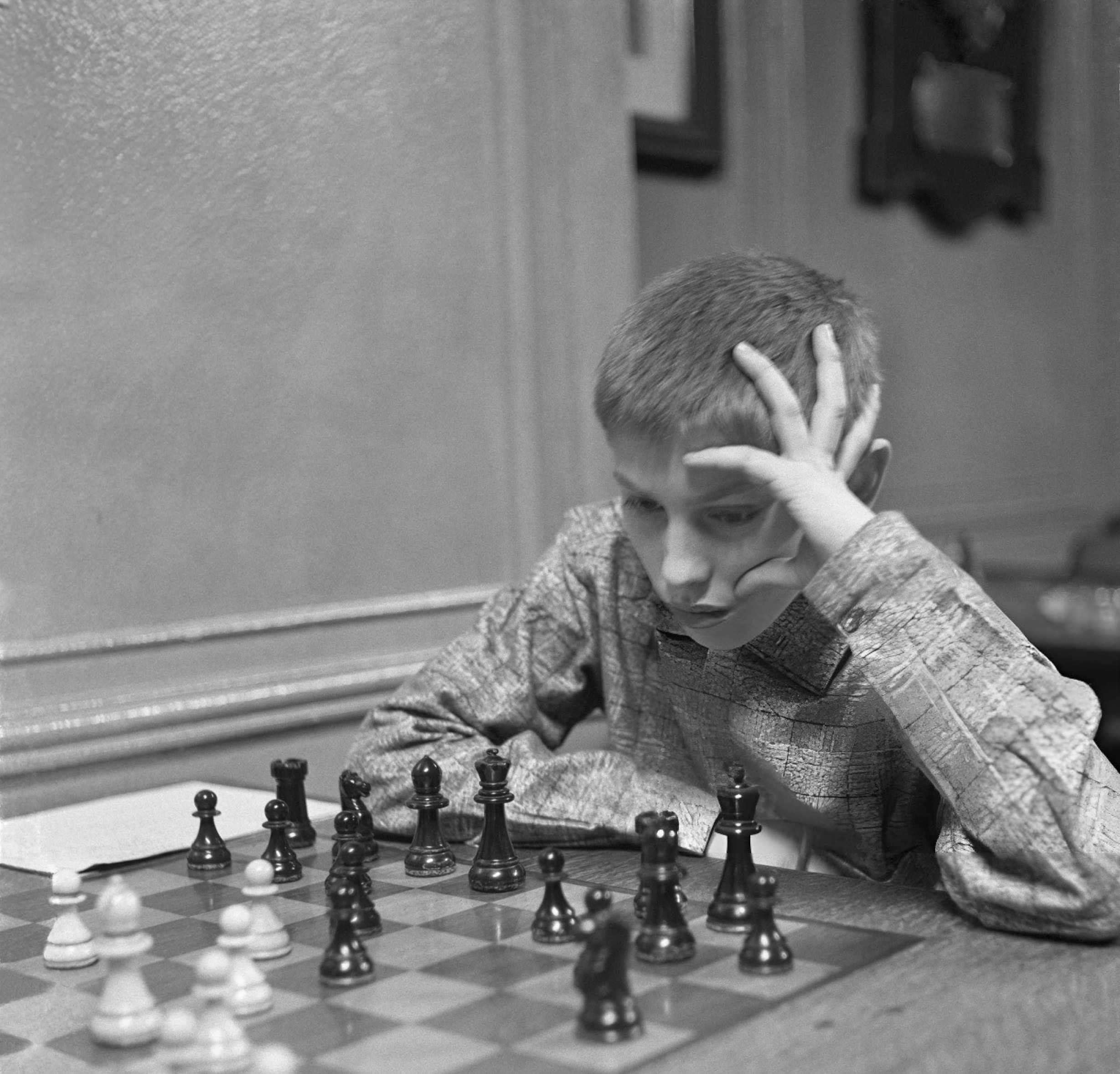 Bobby Fischer at thirteen — already displaying the intense focus that would define his career.
Fischer at the Marshall Chess Club, 1956. The most historically significant early photograph shows the thirteen-year-old Fischer during the Rosenwald Memorial tournament — the event that produced the Game of the Century. Fischer looks impossibly young amid the adult players and cigar smoke of the tournament hall, yet his posture at the board is that of someone who belongs.
Fischer and Jack Collins. Several photographs survive from Fischer's visits to the home of his chess mentor, Jack Collins — the wheelchair-bound master who served as both coach and father figure during Fischer's formative years. These images show a more relaxed Fischer than the tournament photographs, suggesting the comfort he found in Collins's patient guidance.
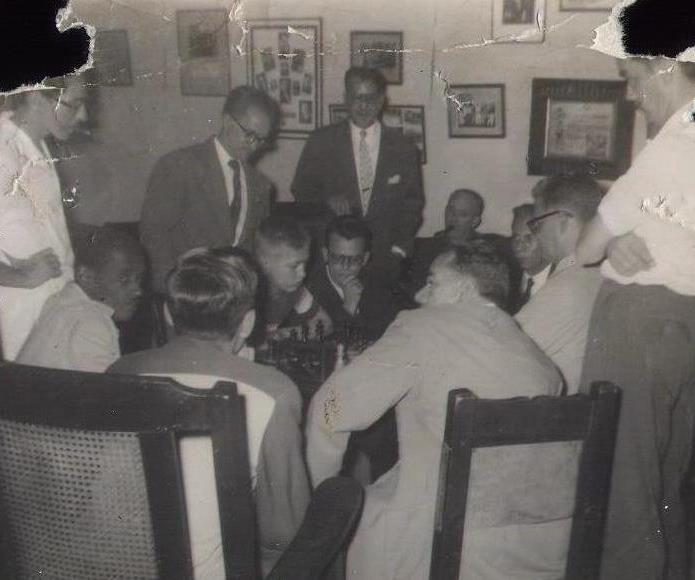 Fischer in Cuba, 1956 — taken during his tour with the Log Cabin Chess Club, where the twelve-year-old gave his first simultaneous exhibition.
The youngest U.S. Champion, 1958. At fourteen, Fischer became the youngest U.S. Chess Champion in history. The photographs from the event capture the contrast between the teenage champion and his middle-aged competitors — particularly Samuel Reshevsky, whose expression in several photographs suggests a man coming to terms with the end of his era.
The Rising Star (1960–1966)
As Fischer entered his twenties, the photographs begin to show a more polished figure. He had started dressing carefully — suits, ties, leather shoes — after concluding that opponents who lost to a scruffy teenager could comfort themselves by dismissing his appearance. The transformation was deliberate: Fischer wanted his opponents to take him seriously before the game began.
Fischer at the Leipzig Olympiad, 1960. The photographs from Fischer's first Olympiad show him competing on first board for the United States against the chess superpowers of the world. At seventeen, he was already one of the strongest players in the field.
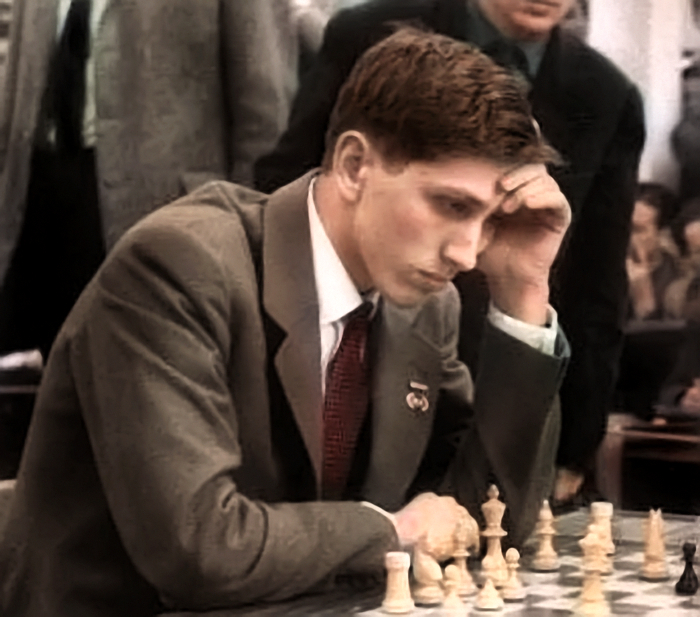 Fischer competing at the 14th Chess Olympiad in Leipzig, 1960 — his first appearance on the world team stage at age seventeen.
Fischer and Tal, Curaçao 1962. Several photographs from the 1962 Candidates Tournament capture Fischer and Mikhail Tal in proximity — two of the most dynamic players of the era, one representing the establishment and the other challenging it. Their body language in these images suggests mutual respect tinged with competitive wariness.
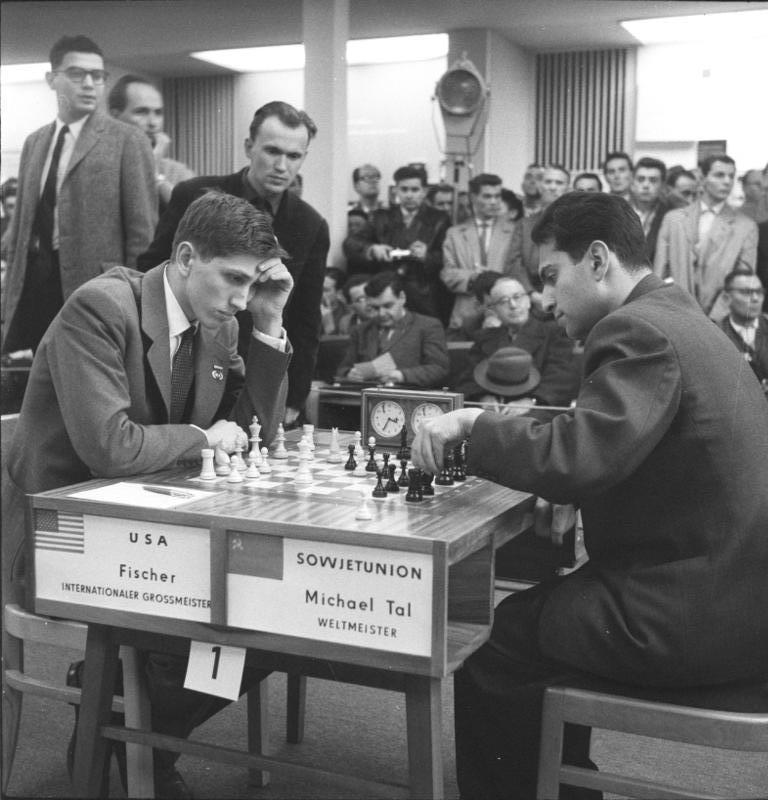 Fischer and former World Champion Mikhail Tal — two of the most brilliant attacking minds in chess history.
The perfect 11–0, 1963/64. The photographs from Fischer's perfect U.S. Championship are notable for what they reveal about Fischer's state of mind: an almost eerie calm, a player so far above the competition that the tension visible in his opponents' faces has no counterpart in his own.
The Cold War Champion (1970–1972)
The photographs from the 1972 World Championship in Reykjavík are the most famous images in chess history — and among the most iconic photographs of the Cold War era.
Fischer arriving in Iceland, July 1972. Fischer's late arrival in Reykjavík — after weeks of negotiations, threatened withdrawals, and a personal phone call from Henry Kissinger — was one of the most anticipated moments in the history of chess. The photographs of Fischer disembarking from his flight, squinting into the Icelandic light, capture the beginning of the most publicized chess match ever played.
Fischer and Spassky at the board. The photographs of the two champions facing each other across the chessboard in Laugardalshöll are the defining images of the match. Fischer's intensity — his forward lean, his fixed gaze, his habit of touching his forehead while thinking — contrasts with Spassky's more upright, aristocratic bearing. The images capture not just a chess match but a collision of worlds.
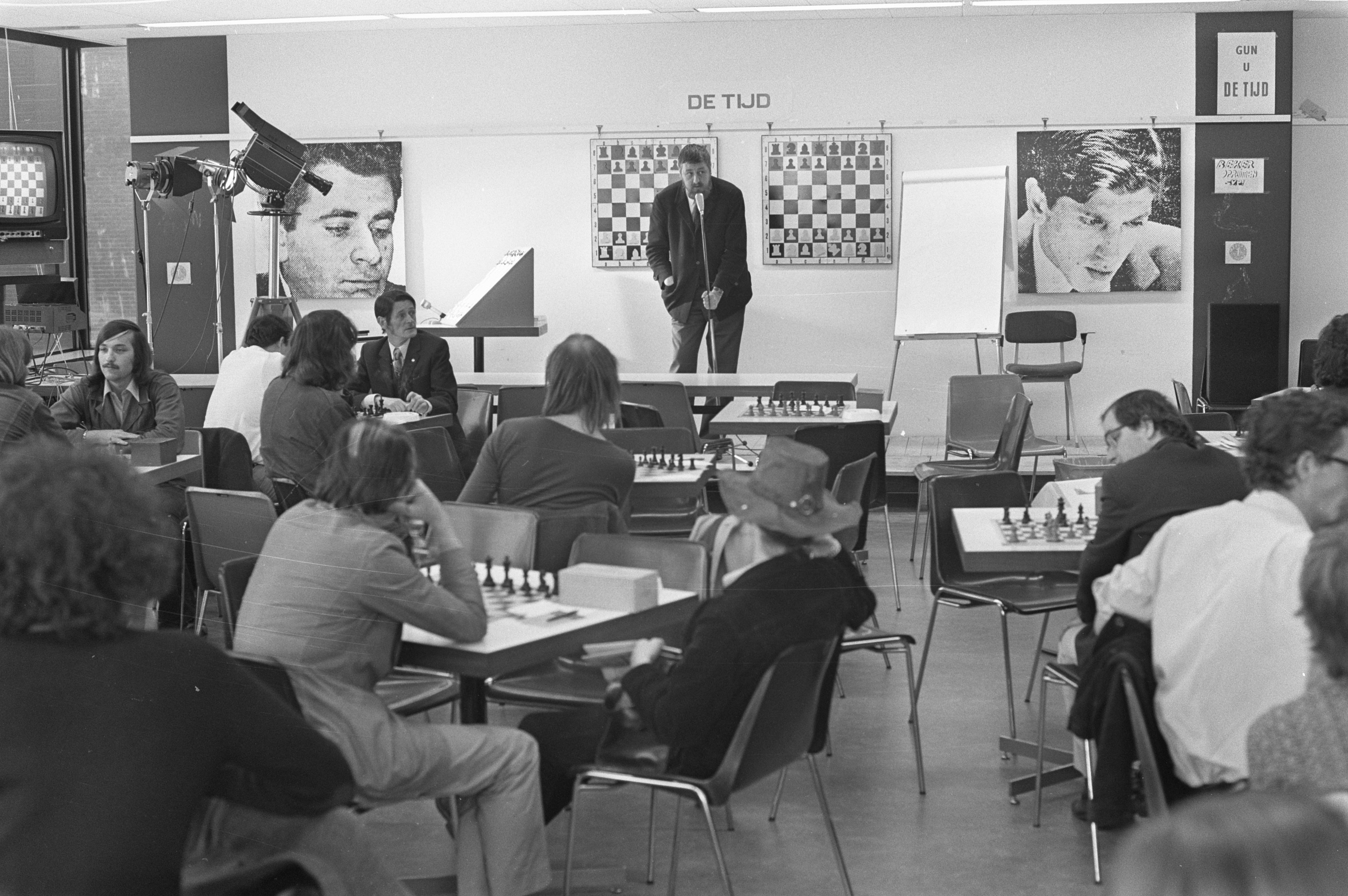 The 1972 World Championship captivated audiences worldwide — expert commentary and analysis brought the drama of each game to spectators following from the tournament hall and beyond.
The standing ovation, Game 6. After Fischer's masterpiece in Game 6 of the World Championship — widely considered one of the greatest games ever played — Spassky rose from his chair and joined the audience in applauding his opponent. The moment was captured in several photographs and has become one of chess's most enduring images of sportsmanship.
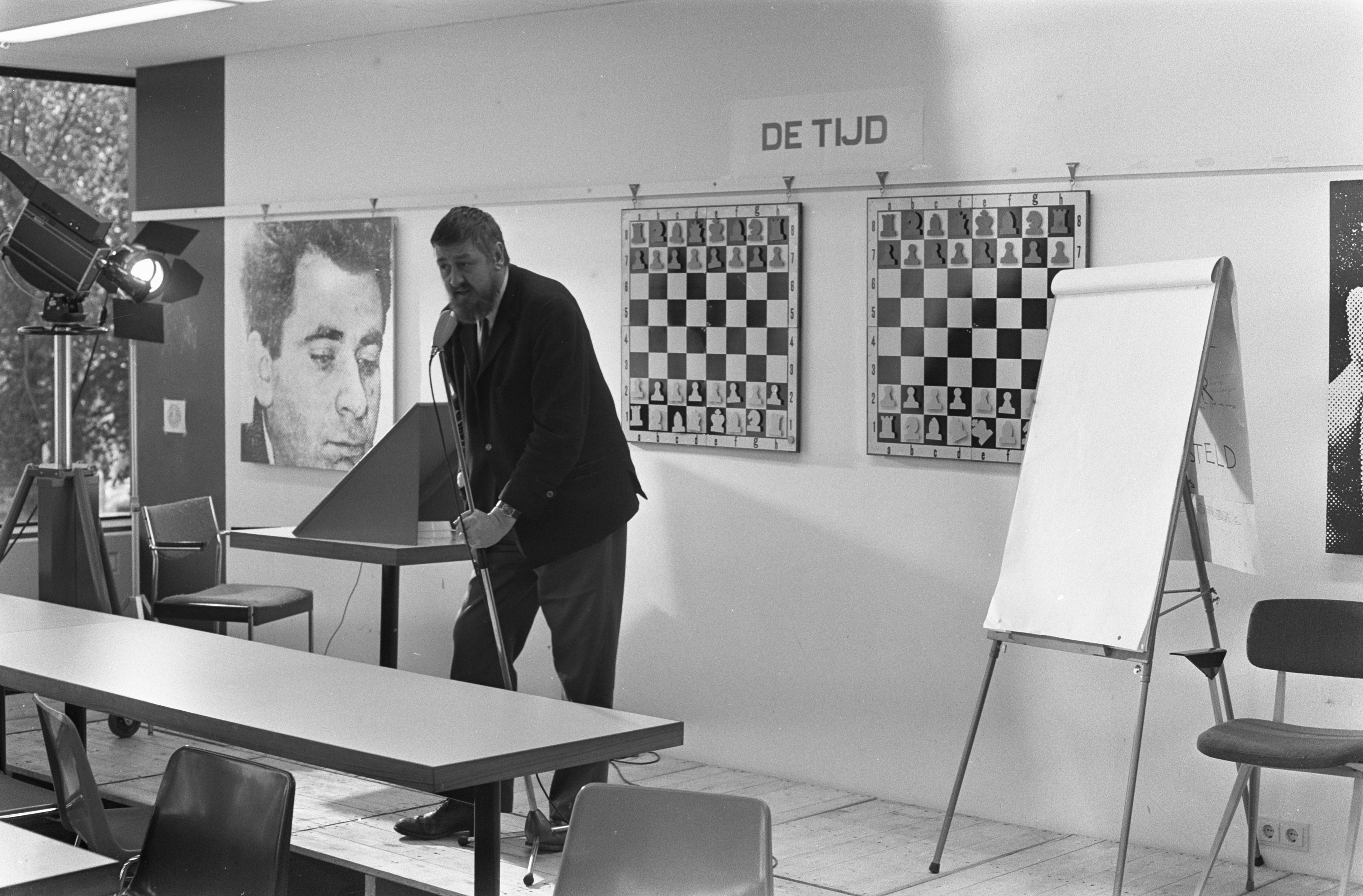 The match between Fischer and Spassky drew unprecedented public attention — crowds gathered to follow the games move by move, turning chess into a global spectator event.
Fischer holding the championship trophy. The photographs of Fischer with the World Championship trophy — often looking more bewildered than triumphant — capture the paradox at the heart of his story. He had achieved the goal he had pursued his entire life, and he seemed not entirely sure what to do with it.
The Exile (1992–2008)
Photographs from Fischer's later years are rarer and more haunting. After his 1992 rematch with Spassky in Yugoslavia, Fischer became a fugitive from American justice and spent the remaining sixteen years of his life in various forms of exile.
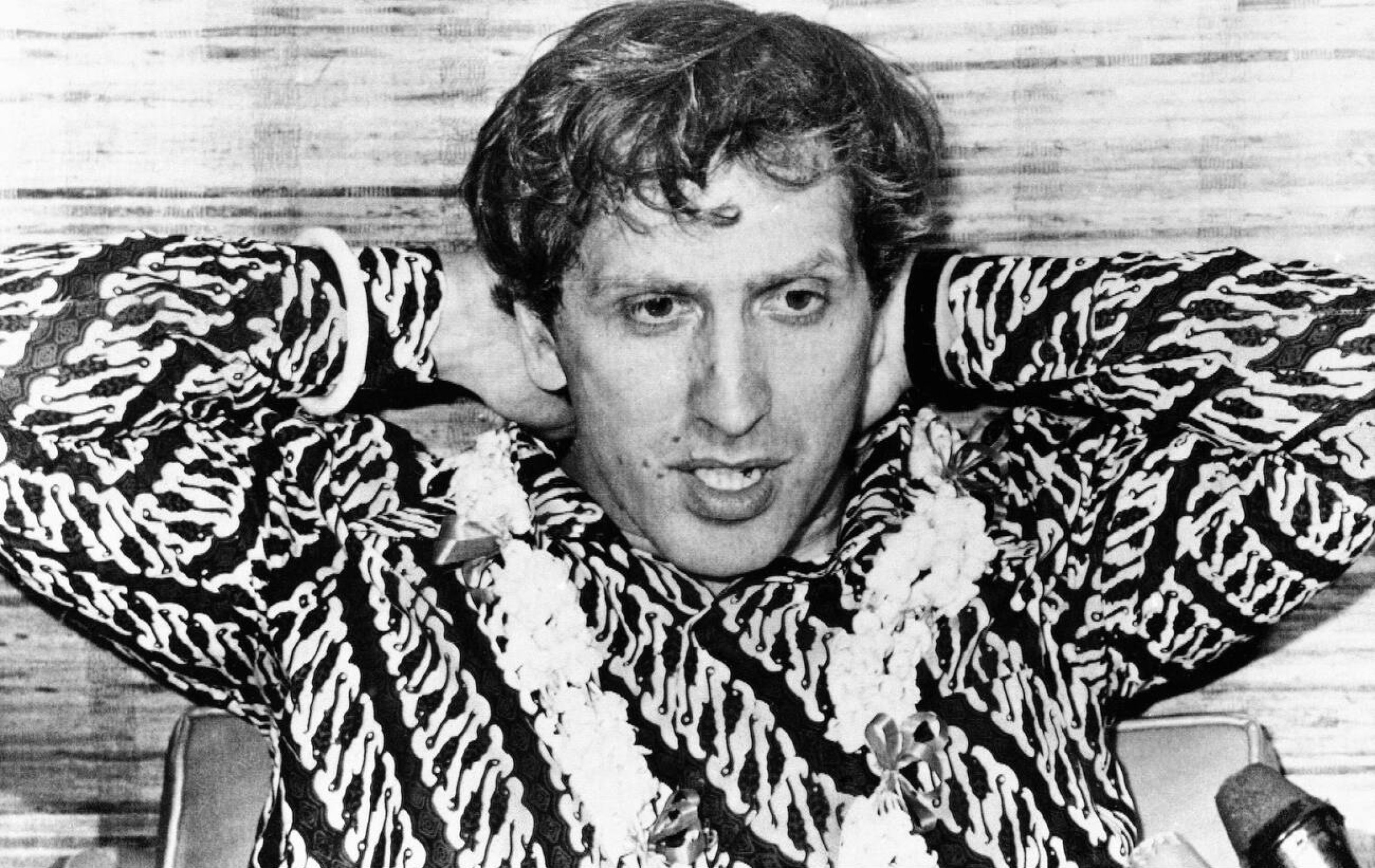 Fischer in Manila, 1976 — during the reclusive years following his refusal to defend the World Championship.
The Spassky rematch, 1992. The photographs from Sveti Stefan, Montenegro, show a heavier, older Fischer — recognizably the same person but visibly changed by twenty years of isolation. His chess, remarkably, was still strong enough to defeat Spassky, and the photographs from the match capture moments of the old competitive fire.
Fischer spitting on the U.S. Treasury letter. One of the most infamous photographs of Fischer's career shows him literally spitting on the U.S. Department of Treasury letter warning him that playing the Spassky rematch would violate international sanctions against Yugoslavia. The image encapsulates Fischer's defiance of authority — heroic or reckless depending on one's perspective.
Arrest in Japan, 2004. The photographs of Fischer being detained at Narita Airport are among the most painful images associated with his story. The former World Champion — gaunt, disheveled, and visibly distressed — was held for nine months in Japanese immigration detention before Iceland granted him citizenship and a home.
Fischer in Iceland, 2005–2008. The final photographs of Fischer show a man who had found a measure of peace in the country that had hosted his greatest triumph thirty-three years earlier. Iceland's generosity gave Fischer his last refuge, and the photographs from this period — while showing the toll of years of stress and isolation — also suggest a quietness that was rare in his turbulent life.
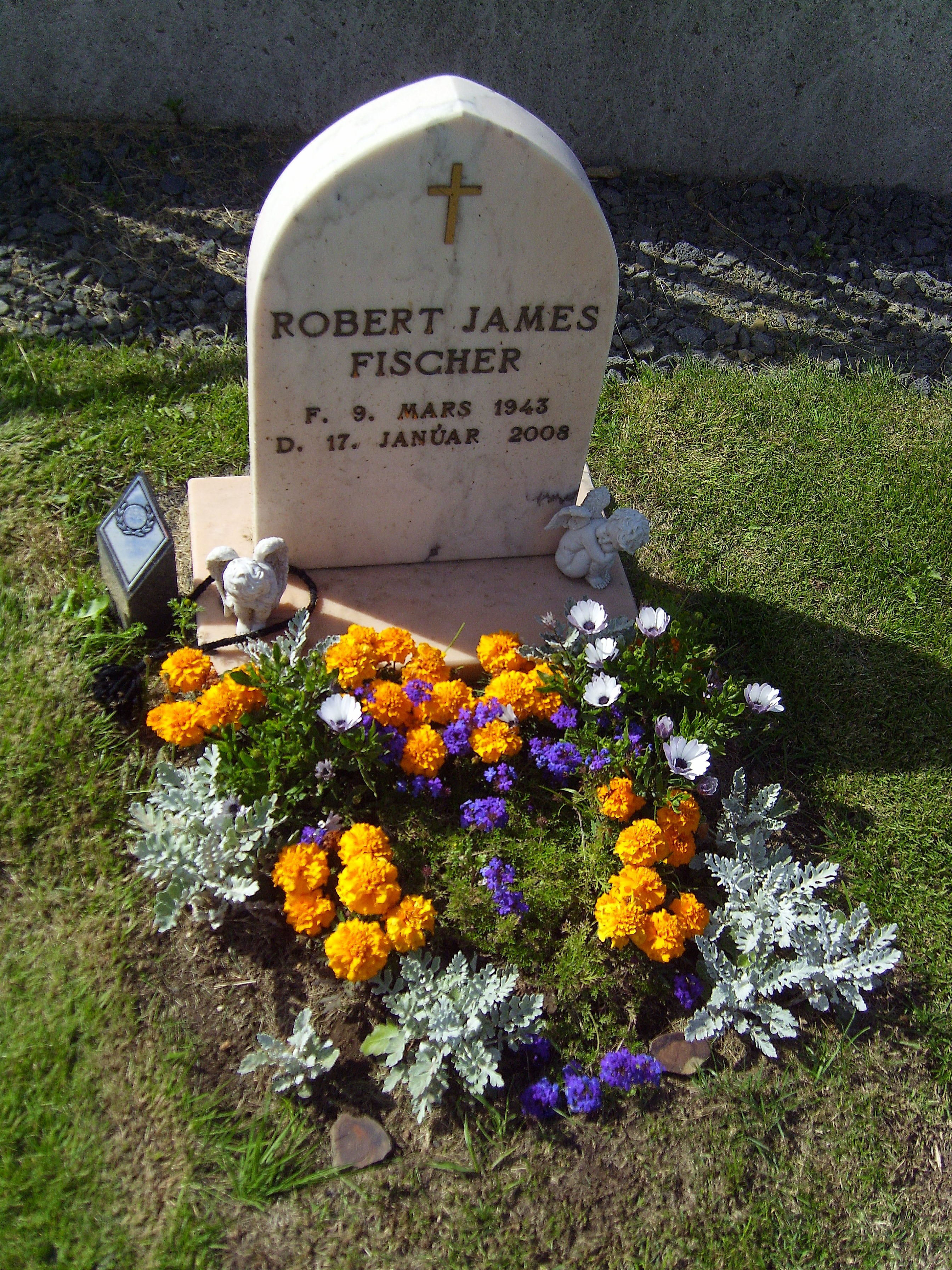 Fischer's final resting place in Selfoss, Iceland — the country that gave him refuge and where he had achieved his greatest triumph.
The Enduring Image
Bobby Fischer's visual legacy is inseparable from his chess legacy. The photographs do not merely document his career — they illuminate the personality behind the moves: the intensity, the brilliance, the combativeness, the loneliness, and the uncompromising individuality that made him unlike anyone who had come before or has appeared since.
For the complete story behind these images, the Bobby Fischer Against the World documentary assembles rare footage and photographs spanning Fischer's entire life, from the Brooklyn chess clubs to his final years in Reykjavík.